Eastern subterranean termites cause structural damage by silently feeding on structural framing behind drywall and subflooring. In historic crawlspace properties throughout Dilworth, Plaza Midwood, and Myers Park, red…
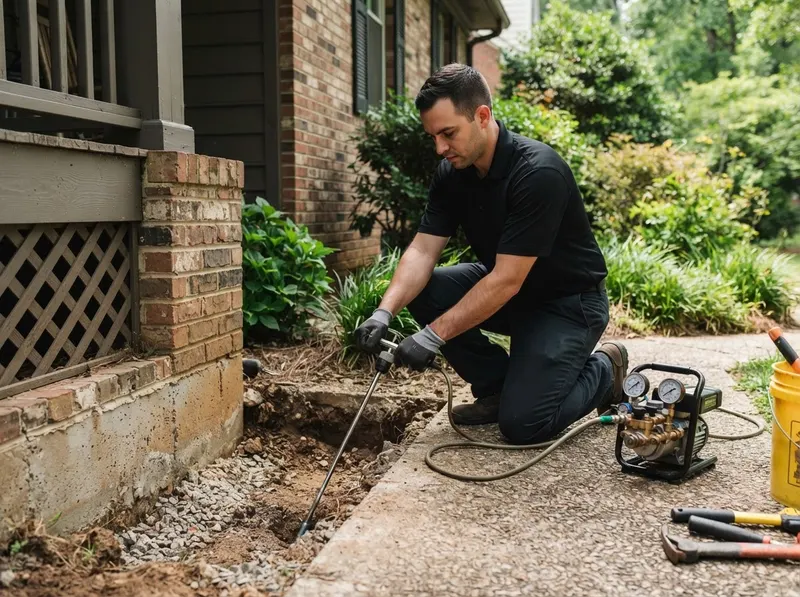
Eastern subterranean termites cause structural damage by silently feeding on structural framing behind drywall and subflooring. In historic crawlspace properties throughout Dilworth, Plaza Midwood, and Myers Park, red clay moisture retention and wood-to-ground contact around brick piers create prime entry paths. Modern slab foundations across Ballantyne and University City face different risks, where foraging worker termites enter through expansion joints, bath traps, and plumbing penetrations hidden beneath utility closets. Addressing these infestations requires targeted, low-impact Integrated Pest Management (IPM) strategies rather than indiscriminate broadcast chemicals, safeguarding indoor living areas while insulating structural framing.
Decision-fit depends entirely on architectural architecture and environmental layout. Continuous liquid termiticide barriers, applied by trenching 6 inches into the soil along foundation perimeters, deliver definitive colony transfer. The non-repellent formulation allows foraging worker termites to pick up active particles undetected and transfer them throughout the underground nest, achieving total colony disruption within 60 to 90 days. For properties bordering fragile botanical beds in Cotswold, Foxcroft, or adjacent to the Wing Haven Gardens watershed, exterior bait station systems provide a proactive alternative. In-ground stations placed every 10 to 15 linear feet intercept worker termites using insect growth regulators that disrupt molting cycles, providing structural defense with zero liquid displacement into residential soil.
Treatment execution follows three calm, systematic steps. First, technicians complete a structural diagnostic covering basements, crawlspaces, foundation footings, and sill plates to map live shelter tubes and quantify moisture readings. Second, technicians install the chosen defense system, either trenching and rodding foundation soil or placing low-profile bait stations flush with the turf line. Third, the home is placed on an annual monitoring protocol with documentation provided for real estate disclosures and warranty continuity. Choosing perimeter soil treatments requires an upfront labor investment for trenching, whereas station monitoring balances minimal physical soil disturbance against scheduled, multi-point quarterly inspections.
Every job gets a firm, written price after a free on-site visit.
Tell us about your subterranean termite treatment job in Charlotte and we'll send a clear, written quote, usually the same day.
 Red Cedar Pest Control