Excessive humidity under a home directly drives primary pest activity in Mecklenburg County. In historic neighborhoods like Dilworth, Myers Park, and Plaza Midwood, brick-pier foundations constructed over native Cecil…
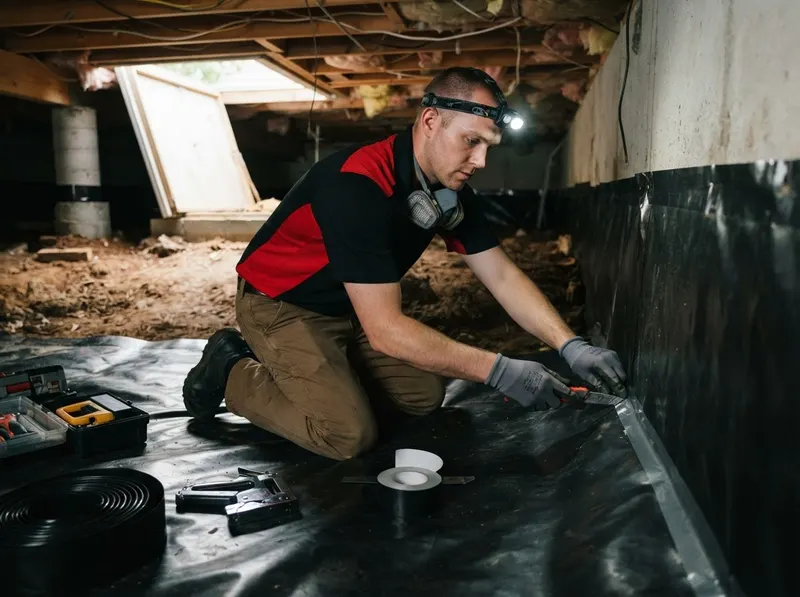
Excessive humidity under a home directly drives primary pest activity in Mecklenburg County. In historic neighborhoods like Dilworth, Myers Park, and Plaza Midwood, brick-pier foundations constructed over native Cecil clay soils consistently wick ground water upward into structural floor joists. Subterranean termites require continuous ambient moisture above 70% relative humidity to bridge protective mud tubes into structural band sills. When crawl space subflooring absorbs atmospheric moisture past an 18% wood moisture content threshold, structural timbers soften, creating an ideal digestive environment for wood-boring beetles and subterranean termite colonies. By adjusting foundation ventilation, laying 10-mil to 20-mil polyethylene vapor retarders across exposed dirt, and sealing foundational air leaks, the subfloor ecosystem becomes inhospitable to moisture-seeking insect colonies without relying on toxic broadcast chemical sprays inside living areas.
Selecting crawl space moisture mitigation over simple pest spray treatments addresses root causation rather than temporary symptom management. A liquid insecticide treatment establishes a protective boundary against subterranean termites, but unmitigated subfloor condensation eventually leaches active chemistry into ground water while leaving structural wood vulnerable to wood-decaying fungi (Coniophora puteana) and silverfish infestations. For homes built on sloped grades near stream beds in Cotswold or Foxcroft, installing a commercial-grade low-temperature dehumidifier and perimeter drain prevents water accumulation beneath ductwork. Conversely, elevated slab construction in South End rarely requires full crawl space encapsulation, needing only localized foundation vent adjustments and exterior splash block realignment. Step 1 involves recording multi-point digital moisture pin readings across subfloor framing. Step 2 requires raking debris and leveling raw ground surfaces. Step 3 secures heavy-gauge vapor barriers with overlapping seams sealed by acrylic adhesive tape. The operational trade-off centers on upfront capital investment against long-term structural integrity: physical encapsulation carries a higher initial cost than a chemical re-treatment, yet eliminates the ongoing damp environment that attracts wood-destroying insects into family living spaces.
Every job gets a firm, written price after a free on-site visit.
Tell us about your crawl space moisture mitigation job in Charlotte and we'll send a clear, written quote, usually the same day.
 Red Cedar Pest Control